


One Daily Habit for Lifelong Clear Vision: The Simple Practice Your Eyes Need
One Daily Habit for Lifelong Clear Vision: The Simple Practice Your Eyes Need
In a world dominated by screens, long work hours, and constant digital exposure, maintaining sharp vision has become more challenging than ever. Blurry eyesight, eye strain, and dryness are increasingly common across all age groups. While genetics and aging certainly play a role, there is one simple habit that can significantly help preserve your vision over time: regular visual breaks using the 20-20-20 rule.
It may sound almost too simple, but consistently giving your eyes structured breaks is one of the most powerful ways to protect long-term eye health.
Why Modern Eyes Are Overworked
From smartphones and laptops to tablets and televisions, our eyes rarely get a chance to rest. Prolonged focus on screens forces the tiny muscles inside the eye — especially the ciliary muscles responsible for focusing — to stay contracted for extended periods. Over time, this leads to digital eye strain, headaches, blurred vision, and dryness.
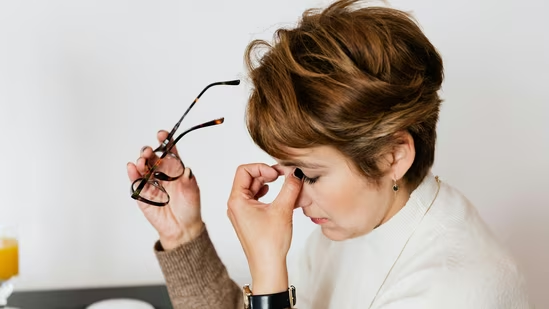
Unlike reading a book, digital screens also expose us to blue light and reduce our blink rate. Studies show we blink up to 50% less while staring at screens, which contributes to dryness and irritation.
Without intentional breaks, this constant strain adds up.
The 20-20-20 Rule Explained
The 20-20-20 rule is simple:
Every 20 minutes, look at something 20 feet away for at least 20 seconds.
This small pause allows your eye muscles to relax and reset. When you shift focus to a distant object, the muscles that control near vision release tension. It’s like stretching after sitting too long — but for your eyes.
Practicing this regularly reduces strain, improves comfort, and may help maintain sharper focusing ability over time.
Why It Works at Any Age
Children and teens benefit because their eyes are still developing and are often exposed to heavy screen use for school and entertainment. Adults gain relief from work-related eye strain. Older adults, who may already experience changes in focusing ability, benefit from keeping eye muscles flexible and active.
While this habit won’t prevent all age-related conditions like cataracts or macular degeneration, it supports overall eye comfort and functional clarity.
Consistency is key. Doing it occasionally won’t make much difference — but practicing it daily builds long-term resilience.
Add Distance Viewing to Your Routine
Beyond the 20-20-20 rule, spending time outdoors is incredibly beneficial for vision health. Looking at distant landscapes — trees, buildings, horizons — naturally exercises the eye’s focusing system.
Natural daylight exposure has also been linked to a lower risk of developing myopia (nearsightedness) in children. Even 30–60 minutes outdoors each day can make a difference.
If you work indoors, try stepping outside during breaks or positioning your desk near a window where you can periodically look into the distance.
Support Vision with Nutrition
While eye breaks are the primary habit, nutrition supports the process. Foods rich in vitamin A, lutein, omega-3 fatty acids, and antioxidants strengthen eye tissue and protect against oxidative stress.
Carrots, spinach, kale, salmon, almonds, and eggs all contribute to healthy vision. Hydration is equally important — dry eyes worsen when the body lacks sufficient fluids.
Think of it as a combined strategy: rest the muscles and nourish the tissue.
Reduce Additional Strain
Small adjustments can further protect your eyesight:
- Keep screens at arm’s length.
- Adjust brightness to match room lighting.
- Increase text size instead of squinting.
- Use artificial tears if dryness persists.
- Ensure proper lighting when reading.
These habits complement the 20-20-20 rule and create an eye-friendly environment.
The Power of Prevention
Vision changes gradually, which makes prevention easy to overlook. Many people only pay attention to their eyes once discomfort becomes persistent. However, proactive care is far more effective than reactive treatment.

By regularly relaxing your eyes throughout the day, you reduce accumulated strain. Over months and years, this simple practice can help maintain sharper focus and greater comfort.
A Small Habit, Big Impact
Keeping vision sharp doesn’t always require complicated routines or expensive treatments. Often, it begins with awareness and consistency.
Taking 20 seconds every 20 minutes may seem insignificant, but over the course of a workday, week, and year, it adds up to hours of relief and muscle relaxation.
Your eyes work tirelessly from the moment you wake up to the moment you fall asleep. Giving them structured rest is one of the simplest investments you can make in lifelong visual clarity.
Start today. Set a timer. Look up. Focus far. Let your eyes breathe — and they’ll serve you better for years to come.