



From Mise en Place to Copper Pots: 5 Secrets of the Traditional French Kitchen
From Mise en Place to Copper Pots: 5 Secrets of the Traditional French Kitchen
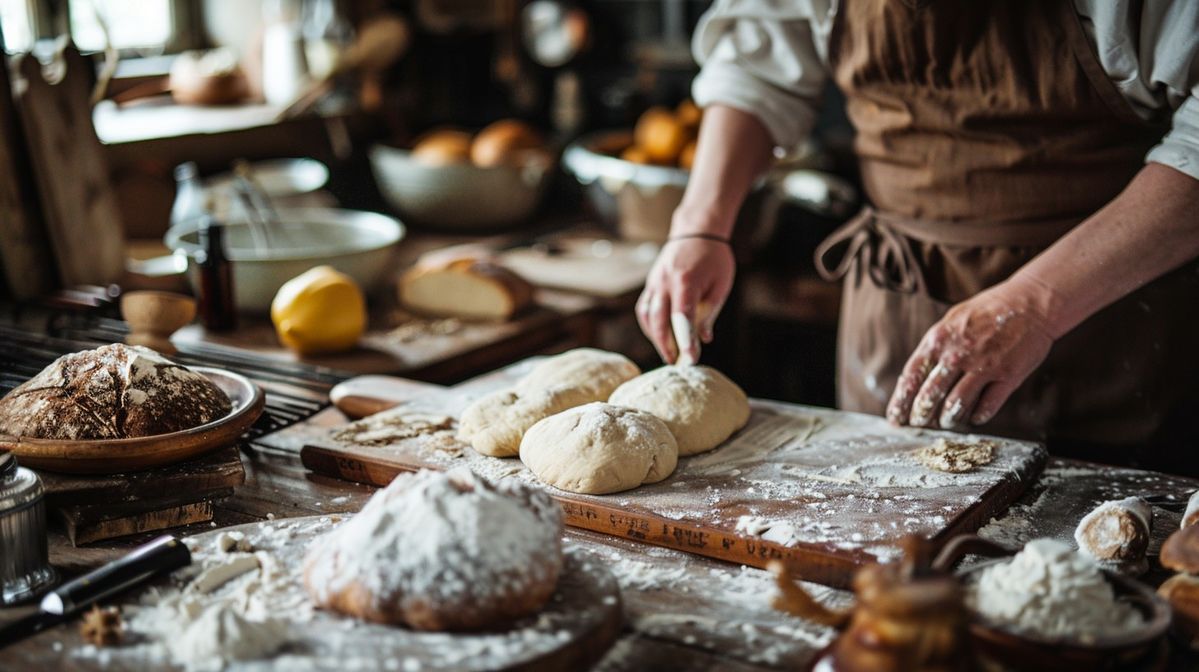
There is a specific temperature at which a French kitchen truly comes alive, and it is usually several degrees cooler than comfortable. It’s that blue, pre-dawn chill where the air smells of cold stone and yesterday’s sourdough. In these moments, before the first burner is struck, the kitchen isn’t just a room; it’s a gallery of copper, cast iron, and unspoken tradition.
To understand the French kitchen is to understand that cooking is not merely an act of preparation—it is a study in geometry and the slow, deliberate passage of time.
The Heavy Weight of Heritage
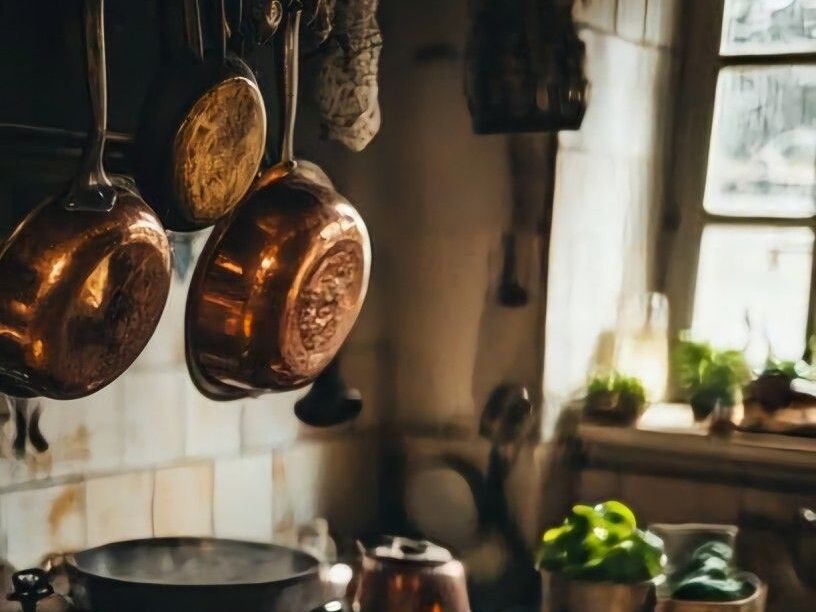
If you look at a well-worn copper sauteuse hanging from a blackened wrought-iron rack, you aren’t looking at “cookware.” You are looking at a thermal engine. Copper is the heartbeat of the French culinary soul; it responds to heat with a sensitivity that stainless steel can never mimic.
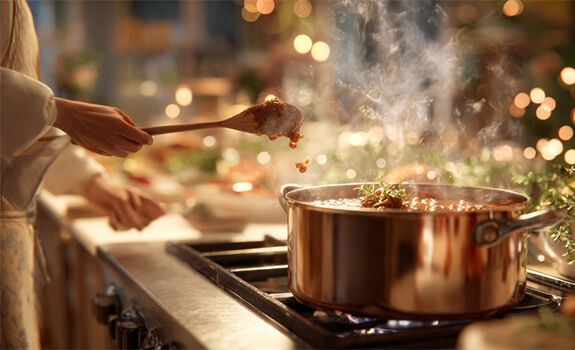
In the villages of Normandy or the hills of Provence, these pots are often heirloom pieces, hammered into shape by a coppersmith two generations ago. They bear the “geometry” of use—small dents where a whisk hit the side ten thousand times, and a patina that tells the story of every Coq au Vin ever braised within its walls. There is a profound human comfort in using a tool that is heavier than it needs to be. It forces you to slow down.
The Ritual of the Mise en Place
The “Quiet Geometry” refers to the mise en place—the obsessive, beautiful arrangement of ingredients before the fire even starts. In a professional Parisian kitchen or a rustic farmhouse, the logic is the same: Order is the precursor to flavor.
- The Symmetry of the Mirepoix: Carrots, celery, and onions diced into perfect, uniform cubes.
- The Bundle of the Bouquet Garni: Thyme, bay, and parsley tied with twine, a geometric offering to the stockpot.
- The Cold Marble: A slab of white stone, kept chilled by the morning air, waiting for the buttery layers of puff pastry.
Why the “Old Ways” are Trending in 2026
In a world of “smart” ovens and air fryers that beep when your food is “optimized,” the analog French kitchen feels like a rebellion. We are seeing a global return to Slow Gastronomy. People are tired of the digital interface; they want the tactile resistance of a wooden spoon against a copper bottom.
The French kitchen reminds us that the best “technology” ever invented for flavor was simply conductive metal and human patience.
Editor’s Note: Building Your Own French Geometry
You don’t need a chateau to capture this feeling.
- Invest in One Piece: You don’t need a set. Buy one heavy-bottomed copper or enameled cast-iron pot. Use it until you know exactly how long it takes to cool down.
- Respect the Cold: Keep your pastry butter in the freezer until the last possible second. The contrast between the cold dough and the hot “glow” of the oven is where the magic happens.
SEO Culinary Tip: When sourcing authentic cookware, look for 2.5mm thickness in copper. This is the professional standard that ensures even heat distribution, preventing the “hot spots” that ruin delicate sauces like Béarnaise.
The Final Word: The Soul of the Stone
The beauty of a French kitchen isn’t in its perfection; it’s in its endurance. It is a place where the morning chill is eventually conquered by the smell of roasting garlic and browning butter. It is proof that as long as we have fire and stone, we have a way to make the world feel warm again.